
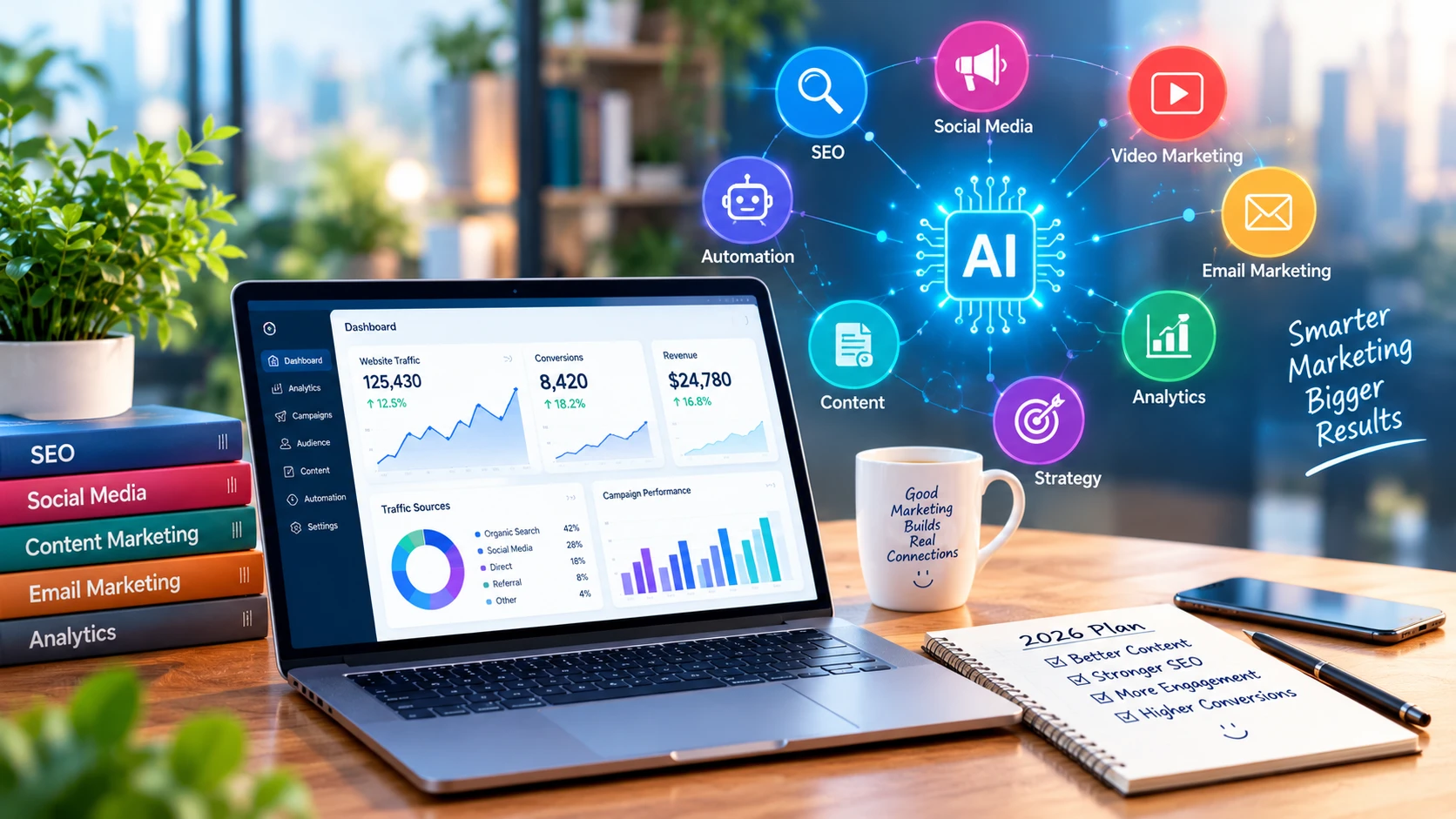
Introduction
Digital marketing continues to evolve as businesses adapt to changing customer behavior, new technologies, and increasingly competitive online markets. In 2026, having a website or posting regularly on social media is no longer enough. Businesses need smarter strategies, valuable content, meaningful customer experiences, and data-driven decisions to stand out.
Artificial Intelligence (AI), search engine optimization (SEO), short-form video, personalized marketing, and marketing automation are shaping how brands reach and engage their audiences.
Whether you are a business owner, digital marketer, freelancer, student, or content creator, understanding modern digital marketing can help you build stronger online visibility and discover new growth opportunities.
1. How AI Is Transforming Digital Marketing
AI has become an important tool for planning, creating, analyzing, and optimizing marketing campaigns. It can help marketers generate content ideas, summarize customer feedback, analyze campaign performance, and automate repetitive tasks.
AI-powered tools can support activities such as:
- Generating blog outlines and social media content ideas.
- Drafting advertising copy and email campaigns.
- Analyzing customer behavior and campaign data.
- Creating images and video concepts.
- Segmenting audiences based on available data.
- Automating parts of marketing workflows.
However, AI-generated content still requires human judgment. Marketers need to verify facts, maintain brand identity, protect customer information, and ensure that content genuinely helps the intended audience.
The strongest approach is to combine AI’s efficiency with human creativity, experience, and strategic thinking.
2. SEO in the Age of AI Search
Search engine optimization remains an important part of digital marketing, but the search experience continues to change. Search engines increasingly provide AI-generated summaries and more conversational ways to discover information.
Businesses should focus on creating useful, trustworthy, original content that answers real customer questions.
Important SEO practices include:
- Researching relevant keywords and search intent.
- Publishing helpful, well-structured website content.
- Improving page speed and mobile usability.
- Using descriptive headings, titles, and meta descriptions.
- Adding relevant internal links and descriptive image alt text.
- Demonstrating experience and expertise where appropriate.
- Keeping business information accurate and up to date.
Businesses should also monitor how visitors discover their content, including traditional search results, AI-assisted search experiences, and referral traffic.
Rather than chasing every new SEO trend, prioritize content quality, technical performance, and a positive user experience.
3. Short-Form Video Marketing Continues to Matter
Short-form video is an effective way to communicate ideas, demonstrate products, share expertise, and introduce a brand to new audiences.
Platforms such as YouTube Shorts, Instagram Reels, and TikTok allow businesses and creators to experiment with short, engaging content.
Video marketing ideas include:
- Quick product demonstrations.
- Tutorials and educational tips.
- Behind-the-scenes content.
- Customer stories and testimonials.
- Frequently asked questions.
- Expert advice and industry insights.
- Product comparisons and demonstrations.
Successful short videos usually communicate one clear idea, capture attention early, and deliver value without unnecessary filler.
AI-powered editing tools can help generate captions, remove background noise, and repurpose longer videos into shorter clips. Nevertheless, authentic storytelling and relevant information remain essential.
4. Social Media Marketing Beyond Likes and Followers
Social media marketing is about more than collecting followers. Businesses need to build relationships, encourage meaningful engagement, answer customer questions, and guide interested audiences toward useful next steps.
In 2026, brands can strengthen their social media strategies by focusing on:
- Consistent, recognizable brand communication.
- Helpful and educational posts.
- Short videos and interactive content.
- Community engagement and timely responses.
- Creator collaborations that fit the brand.
- Social listening and audience feedback.
- Clear calls to action.
Businesses should choose platforms based on where their target audiences spend time instead of trying to maintain an active presence everywhere.
Measuring meaningful outcomes, such as qualified leads, website visits, inquiries, and sales, is more useful than judging performance by likes alone.
5. Personalization and Customer Experience
Customers expect brands to understand their needs and provide relevant information. Personalization can make marketing messages more useful when it is based on appropriate customer preferences and responsibly collected data.
Businesses can use personalization to improve:
- Email recommendations.
- Product suggestions.
- Landing page experiences.
- Customer onboarding.
- Follow-up messages.
- Loyalty and retention campaigns.
For example, an online store might recommend products related to a customer’s previous purchase, while an educational platform might suggest courses based on a learner’s selected interests.
Effective personalization should be helpful, transparent, and respectful of privacy. Collecting more data is not automatically better; the goal is to create a more relevant customer experience.
6. Email Marketing and Automation
Email marketing remains a valuable channel for communicating directly with interested customers. Unlike social media platforms, email gives businesses a direct way to reach people who have chosen to receive their messages.
Modern email marketing can include automated welcome sequences, abandoned-cart reminders, educational newsletters, product announcements, and customer re-engagement campaigns.
To improve results:
- Build a permission-based email list.
- Write clear and relevant subject lines.
- Segment audiences when useful.
- Provide valuable information rather than constant promotions.
- Test different messages and calls to action.
- Monitor delivery, engagement, conversions, and unsubscribes.
Marketing automation can reduce repetitive work, but campaigns should still feel relevant and human. Businesses must also follow applicable privacy and email marketing regulations.
7. Data-Driven Marketing and Analytics
Successful digital marketing requires understanding what works, what does not, and why.
Analytics tools help marketers evaluate website traffic, campaign engagement, lead generation, conversion rates, and customer acquisition costs.
Useful performance indicators include:
- Traffic: How many people visit your website?
- Engagement: How do people interact with your content?
- Conversion rate: What percentage of visitors complete a desired action?
- Cost per lead: How much does it cost to generate a potential customer?
- Customer acquisition cost: How much does it cost to acquire a customer?
- Return on ad spend (ROAS): How much revenue is generated per unit of advertising spend?
The right metrics depend on campaign objectives. A brand awareness campaign, for example, should not be judged by the same measures as a direct sales campaign.
Data becomes valuable when marketers use it to make better decisions, test ideas, and improve future campaigns.
8. Influencer and Creator Marketing
Creator partnerships can help brands connect with audiences through personalities they already follow and trust.
Businesses do not always need to work with celebrities or creators with millions of followers. Smaller creators with relevant audiences may offer a more suitable partnership for a particular product or niche.
When choosing a creator, consider:
- Audience relevance.
- Content quality and authenticity.
- Meaningful engagement.
- Previous brand collaborations.
- Campaign objectives and budget.
- Appropriate disclosure of sponsored content.
The best partnerships create value for both the audience and the brand. Clear expectations, honest communication, and measurable goals help businesses evaluate campaign performance.
9. Paid Advertising and Smarter Campaign Optimization
Paid advertising can help businesses reach specific audiences, test offers, and generate traffic or leads more quickly than some organic strategies.
Platforms such as Google Ads and Meta Ads offer targeting, measurement, and automated campaign optimization features.
To improve advertising performance, marketers should:
- Define a clear campaign objective.
- Understand the target audience.
- Create relevant advertisements and landing pages.
- Set realistic budgets and conversion goals.
- Track results using suitable measurement tools.
- Test creative variations and messaging.
- Review spending and campaign quality regularly.
AI-powered advertising features can automate some bidding, targeting, and creative tasks, but they do not guarantee profitable results. Marketers still need to monitor performance, understand their customers, and evaluate the quality of leads and sales.
10. Content Marketing That Builds Trust
Content marketing helps businesses attract and educate potential customers by providing information that solves real problems.
Useful content can take many forms, including blog posts, tutorials, videos, case studies, newsletters, guides, and downloadable resources.
A practical content strategy should begin with three questions:
- Who is the target audience?
- What problems or questions do they have?
- What information will help them make a better decision?
For example, a software company could publish tutorials, a restaurant could share menu stories and cooking tips, and an online learning platform could create educational articles related to its courses.
Consistent, high-quality content can support SEO, build credibility, and help customers understand a business before they make a purchase.
11. Essential Digital Marketing Skills to Learn in 2026
The digital marketing industry combines creativity, technology, communication, and analytical thinking.
If you want to start or advance your career, consider developing these skills:
- Search engine optimization (SEO).
- Social media strategy and management.
- Content writing and copywriting.
- AI tools and prompt writing.
- Video creation and editing.
- Email marketing and automation.
- Paid advertising.
- Web analytics and reporting.
- Conversion rate optimization.
- Marketing strategy and communication.
You do not need to master everything at once. Start with the skills most relevant to your career goals, practice with real projects, and build a portfolio that demonstrates your abilities.
12. How to Build a Digital Marketing Strategy
A successful digital marketing strategy does not require using every platform or adopting every new technology. It requires clear objectives, a good understanding of the audience, and consistent execution.
Follow these steps to build a practical strategy.
Step 1: Define your goals. Decide whether you want to increase brand awareness, generate leads, grow sales, or retain existing customers.
Step 2: Understand your audience. Research their needs, interests, challenges, and preferred communication channels.
Step 3: Choose suitable channels. Focus on the platforms and marketing methods that best support your goals.
Step 4: Create valuable content. Develop useful articles, videos, social media posts, emails, and other resources.
Step 5: Use tools strategically. Apply AI, analytics, and automation where they can improve your workflow or customer experience.
Step 6: Measure performance. Track relevant metrics and compare results against your objectives.
Step 7: Improve continuously. Test new ideas, learn from campaign results, and adjust your strategy based on evidence.
A focused strategy with clear goals is often more effective than spreading limited resources across too many marketing channels.
Conclusion
Digital marketing in 2026 is being shaped by AI, changing search experiences, video content, personalization, automation, and data-driven decision-making. These developments are creating new opportunities for businesses, marketers, freelancers, and entrepreneurs to reach audiences and build stronger online relationships.
However, technology alone does not guarantee success. Understanding customer needs, creating valuable content, building trust, and measuring meaningful results remain at the heart of effective marketing.
Whether you are starting a new business, developing your career, or improving an existing marketing strategy, continuous learning and practical experience can help you adapt to this evolving industry.
The future of digital marketing belongs to those who combine smart technology with creativity, meaningful customer relationships, and data-informed decisions. Start learning, experiment with new strategies, and turn digital opportunities into measurable growth.

Make Comment
Your email address will not be published.
Comments 0